Georgia energy leaders urge residents to accept data centers or get left behind
The whole universe would be included consumer/retail that would be impacted the same as commercial and industrial.
On Thursday, deep in the halls of the Coca-Cola headquarters in Atlanta, CEOs of energy companies, Chamber of Commerce leaders and data center development figures defended how they’re meeting Georgia’s growing energy needs and tried to quell customer concerns about reliability and costs.
The state’s energy demands are increasing and transforming at unprecedented rates, and power bills, energy sources and data centers are continually a contentious topic. Energy leaders across the state wanted the chance to give an industry update and set the record straight at the Georgia Chamber State of Energy conference.
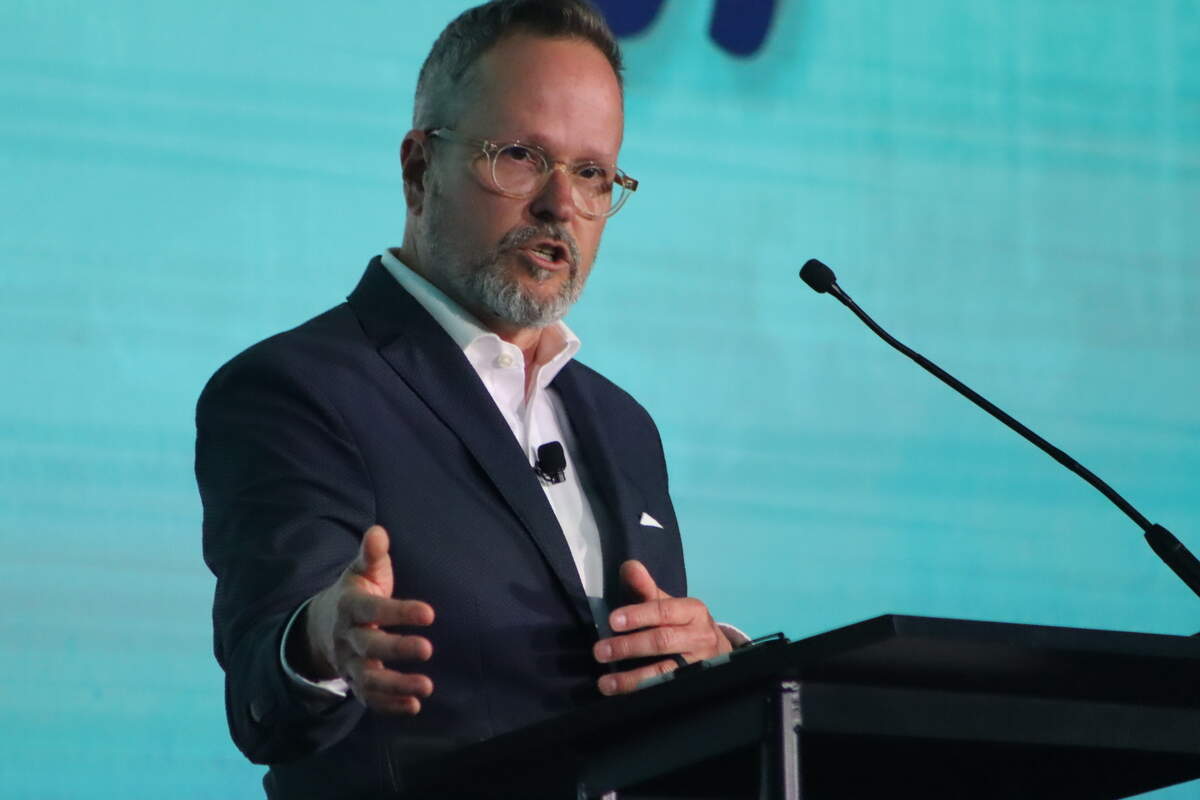
In his opening statement, Chris Clark, CEO and president of the Georgia Chamber, said infrastructure is what “determines economic destiny” and that communities that do not connect to the “right infrastructure” would fall behind.
“We know that communities connected to the right infrastructure do well, thrive, and communities that don’t fall behind,” Clark said. “That’s the first lesson of economic development 101. Infrastructure has determined economic opportunity, and as we look at the data and Georgia’s growth, we are living through the next great infrastructure transition.”
That transition comprises transmission poles and pipelines moving energy from coal, nuclear, gas, hydro, battery storage and solar power plants to substations serving customers. In Georgia, there were more than 18,000 miles of transmission lines as of 2023, according to Georgia Transmission Corporation, and 19,000 miles by 2025, according to the National Resource Defense Council.
Transmission is growing — and so are customers.
Ninety-percent of all new Georgia Power load growth is going toward data centers, Georgia Power said in Georgia Public Service Commission fillings in 2025 when 10 gigawatts of power was approved.
The energy transition Clark called “economic destiny” Thursday is being met with scrutiny in places like Fayette County and Coweta County, where Georgia Power is constructing transmission power lines and monopoles (power poles). The company is seizing hundreds of parcels of land to construct industrial-scale 230kv and 500kv transmission lines to serve data centers.
Some Georgians, such as Coweta County resident Ansley Brown, have taken to social media to help save their land from eminent domain by Georgia Power. Her video about her mother’s home has racked up 6.1 million views on TikTok.
Fayette County Development Authority president Niki Vanderslice began developing plans in 2017 for the 600-acre QTS hyperscale data center campus. She spoke at the conference about the benefits of data centers and some of the lessons learned.
“We’ve learned some lessons about transmission lines,” she told Clark on stage Thursday. “… I look at development for the whole county. I’m sorry for the 200 people, 200 parcels that were impacted, or whatever the number was, but I’m looking out for a county of 127,000..”

If not for the data center, Vanderslice said, that property would have served 1,200 homes, and the data center will use less than 100 homes worth of water. She did not say how much energy the homes would amount to versus the hundreds of megawatt hyperscale data center campus.
Clark asked the power leaders what are some of their biggest challenges.
Jim Fuller, president and CEO of MEAG, a municipal electric company, said there is an opportunity to lower commercial industrial rates if residents can accept data centers.
“The (challenge) is getting over this issue with the data centers ‘not in my backyard,’” he said. “When ... you’ve got large capital fixed costs that you’re spreading over a certain rate-base on number of customers and you bring in a data center, the volumes of energy you’ll sell, you can spread that fixed cost across the whole universe, and that translates into lower commercial industrial rates.”
In a June 1 email to the Ledger-Enquirer, MEAG communications director Andy Mus said Fuller meant to include customers in his “whole universe” of people who would benefit from costs spreading, not just commercial and industrial ratepayers.
Georgia Power CEO Kim Greene said the Georgia Public Service Commission was reviewing the latest fuel recovery and storm recovery requests just a few miles away while Thursday’s conference was happening. Those dockets were approved by the time she finished speaking, which would create a $4 per month lower bill starting June 1, but critics argued data centers still aren’t paying their fair share.
Greene focused on steering away doubts about how much larger customers could impact reliability.
“We’re building the transmission,” Greene said. “We’re building the distribution to ensure that everybody has reliable power going forward. No one needs to worry that you’re going to have lower reliability because of large load growth.”
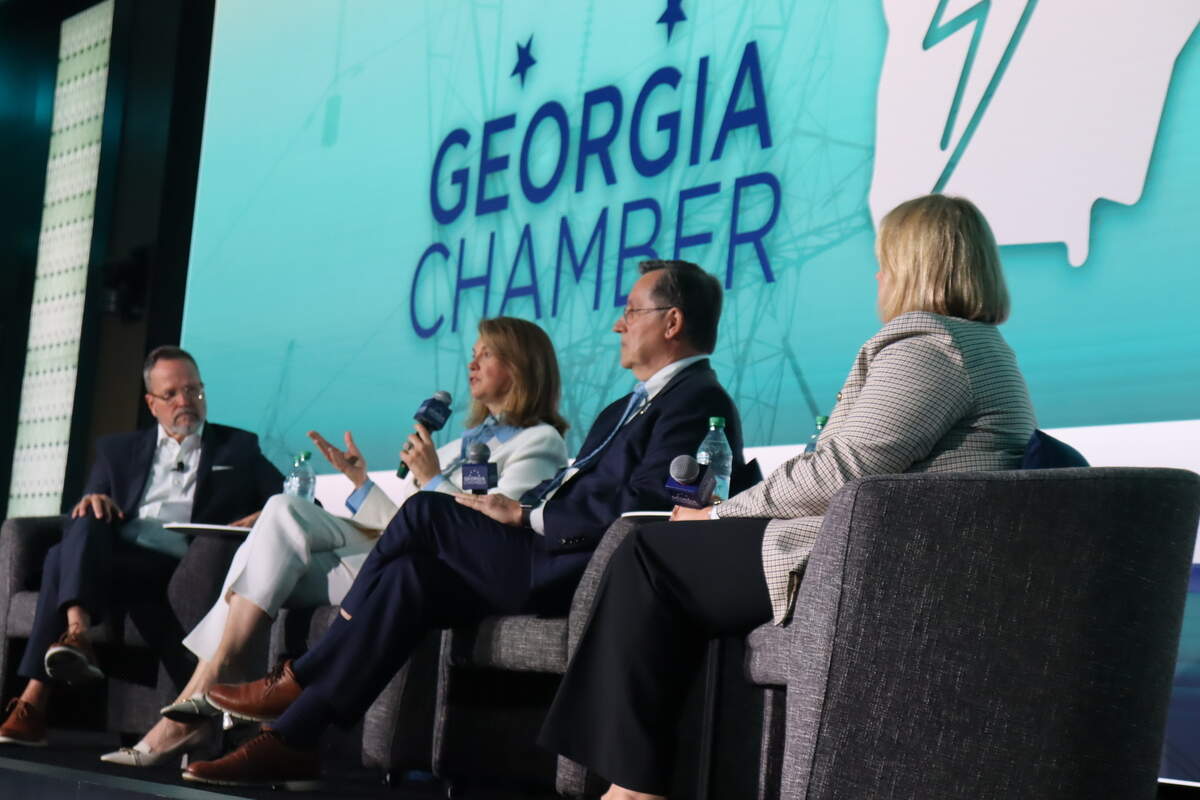
Greene said Georgia is different from other states when it comes to national media headlines about power costs and rates.
“Here in Georgia, you get stability, long-term planning and an understanding of where energy comes from and the focus on affordability and reliability, and I think that message is a positive message we all need you to help us share,” she said to the audience of hundreds of business leaders.
Fuller also touted how well MEAG, Oglethorpe Power and Georgia Power and Georgia Transmission work together.
“We’re the envy of balance of the country,” he said. “..... Everybody in Georgia should be proud of the way we work with the regulatory folks, our cities and the governance of each entity to really have a top-notch integrated transmission system.”
This story was originally published May 28, 2026 at 6:21 PM with the headline "Georgia energy leaders urge residents to accept data centers or get left behind."